
A Guide to Common Orthodontic Appliances
When it comes to straightening your teeth and achieving a healthier smile, there are a variety of orthodontic appliances that can be used, each designed for different needs. Whether you’re undergoing traditional braces treatment or exploring alternatives like clear aligners, understanding the different types of appliances can help you make an informed decision about your orthodontic care.
What Are Orthodontic Appliances?
I am pretty sure you know what they are, but in case: Orthodontic appliances are devices used by orthodontists to align teeth, correct bite issues, and guide the development of the jaws. These appliances can be removable or fixed, depending on the treatment plan and the specific dental concerns. Let’s break them down.
Fixed Orthodontic Appliances
Fixed appliances are bonded or cemented to the teeth and cannot be removed by the patient. These are typically used for more complex cases or when constant pressure is needed to move the teeth over time.
Traditional Braces (Metal, Ceramic, and Lingual)
Traditional braces consist of brackets attached to the teeth and connected by a wire that gradually moves them into place. Metal braces are the most durable, ceramic braces are tooth-colored for a less noticeable look, and lingual braces are placed behind the teeth for a nearly invisible appearance.
Self-Ligating Braces (Damon Braces)
Similar to traditional braces but with brackets that hold the wire without elastic bands, allowing for less friction and potentially shorter treatment time.
Palatal Expanders 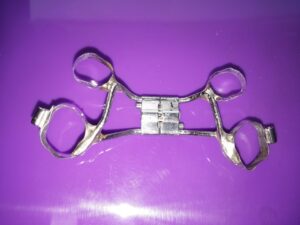
Expanders help widen the upper jaw, often used in children to correct crossbites and create space for incoming teeth.
Advanced Lightwire Functional (ALF) Appliance
The ALF appliance is a unique, lightweight, and flexible wire appliance designed to promote natural jaw development and alignment. Unlike traditional braces, it works with the body’s natural forces to encourage proper tongue posture, breathing, and facial structure development. It is often used in holistic and functional orthodontics.
Herbst Appliance
Used for correcting overbites by repositioning the lower jaw forward over time.
Forsus Springs
An alternative to rubber bands in braces, Forsus Springs help correct overbites by moving the lower jaw forward.
Transpalatal Arch (TPA)
A metal wire across the roof of the mouth that maintains the upper jaw’s width and prevents molars from shifting.
Nance Appliance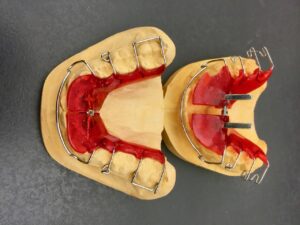
Used to hold molars in place, preventing unwanted movement during orthodontic treatment.
Quad Helix
A spring-like appliance that slowly expands the upper jaw.
Rapid Palatal Expander (RPE)
A device that widens the upper jaw more rapidly than a standard expander, often used in children.
Space Maintainers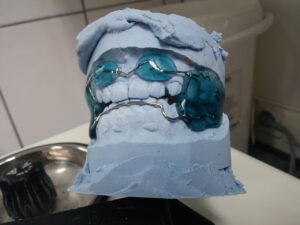
Used to keep space open for permanent teeth if baby teeth are lost too early.
MARA Appliance
A device designed to correct overbites by gently guiding the lower jaw forward.
Temporary Anchorage Devices (TADs)
Mini screws implanted in the jawbone that provide additional anchorage for tooth movement.
Removable Orthodontic Appliances
Removable appliances can be taken out for eating, cleaning, or special activities. These are often used for minor corrections or after fixed braces.
Clear Aligners (Invisalign,  ClearCorrect)
Custom-made, nearly invisible trays that gradually move teeth into alignment.
Hawley Retainers
A retainer with a wire and plastic component to maintain tooth position post-braces.
Essix Retainers
Clear plastic retainers that fit snugly over teeth to prevent shifting.
Functional Appliances (Twin Block, Bionator, Frankel)
These guide jaw growth and are often used for children with bite discrepancies.
Schwarz Appliance
A removable appliance for expanding the upper or lower jaw.
Bite Plate
Used to correct deep bites by creating space between the upper and lower teeth.
Positioners
Fine-tune the final positioning of teeth after orthodontic treatment.
Myobrace
Encourages proper tongue posture and breathing while guiding jaw development, particularly in young children.
Choosing the Right Orthodontic Appliance
The best appliance for you depends on factors such as age, severity of misalignment, and treatment goals. Fixed appliances are often used for more complex cases, while removable options offer flexibility.
If you’re considering orthodontic treatment, consult your orthodontist to determine the best appliance for your needs. With the right device and proper care, you can achieve a healthy, beautiful smile.